John Lapraik
Early years
 Born in 1727 about three miles to the west of Muirkirk, as the elder son John Lapraik succeeded to the family estate.
Married life
Aged 27 he married Margaret Rankin (sister to John Rankin who was another friend of Burns) in March 1754 and received a dowry from her of one hundred pounds sterling. At the time of his first marriage Lapraik's property holdings were substantial, including Nether Dalquhram, Upper Dalquhram, (commonly called Laigh Hall) and Douglass Dalquhram, along with..
..the respective houses, biggings, yeards, parts, and pendicles and haill pertinents of the said several lands and teinds, parsonage and vinerage of the same, all lying within the parish of Muirkirk, lordship and late regality, now barony of Kylesmuir, and sheriffdom of Ayr, together with the fishing of salmond and other fishing in the water of Ayr.
In addition, he also leased the nearby mill of Muirsmill.
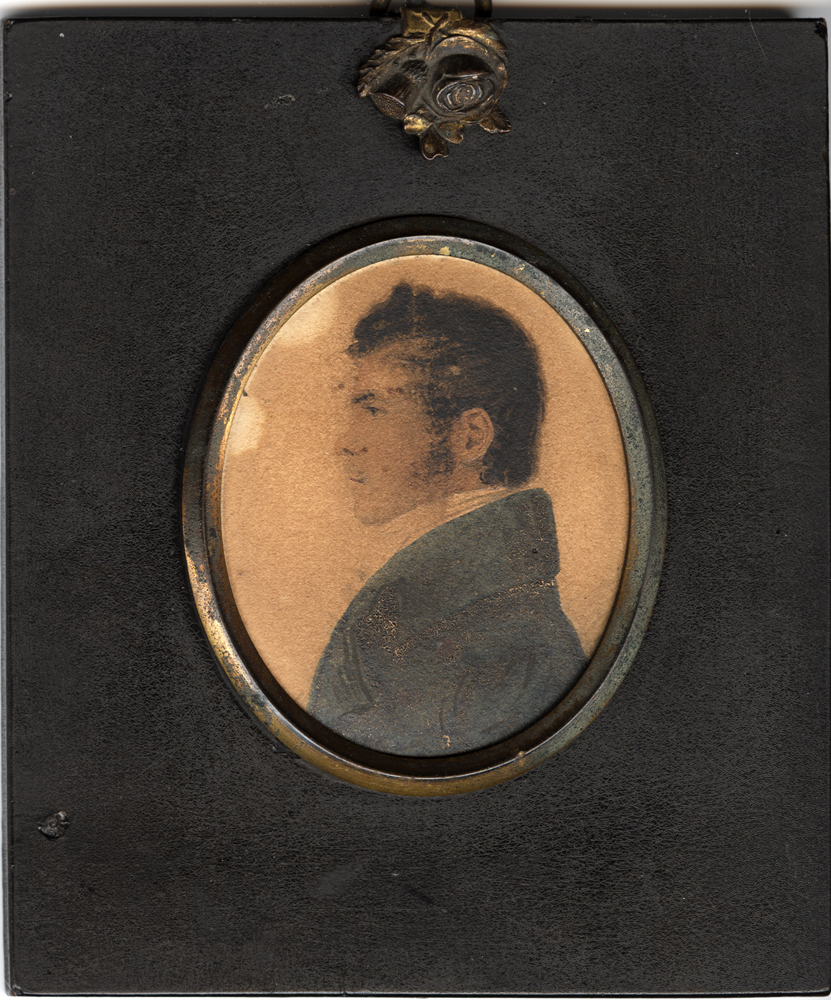
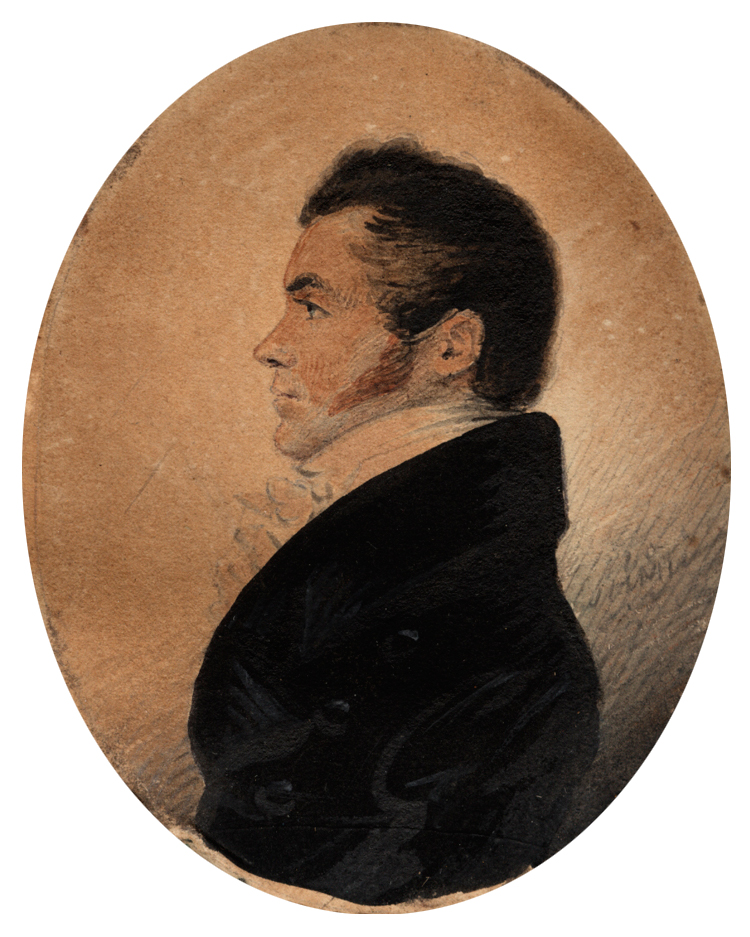
The two portraits that feature here are held by The Dick Institute and are believed to be of the poet John Lapraik and his brother James Lapraik (1729 - ).
In about 1762, eight years after they had married, Margaret Rankin died whilst giving birth to their fifth child. Four years later in 1766, aged 39, he married Janet Anderson of Lightshaw, who lived on a neighbouring farm and they went on to have nine further children who attained the years of maturity.
It would seem from one of his poems that it was a happy partnership:
Ye gods! who reside in the regions above,
Deprive me of my life, or inspire her with love!
Make Jenny's fond bosom to feel for my pain,
That I may sweet peace and contentment regain...
She smiled sweetly on me, and gave me her hand,
And with blushes did own she was at my command;
Transported with joy, while she lean'd on my breast,
I thanked the kind gods who had heard my request:
So I to all sorrows and cares bid farewell,
While Jenny does love me, no care I can feel.
and he would have enjoyed a comfortable life as a gentleman farmer and amateur poet.
Possessed of a cheerful and kind disposition, few men were more beloved in his sphere, or better fitted for the reciprocal interchange of social life. Fond of poetry and song, he essayed the rustic lyre; and happy in his household, its strings were alone attuned for the domestic hearth. Little did he dream that the muse thus wooed in prosperity, should, at no distant period, become the solace of his misfortune!
"The Contemporaries of Burns and the more recent poets of Ayrshire" (1840) by James Paterson
Financial crisis
There was a financial crisis in 1773 when the Douglas, Heron & Company, trading as the Ayr Bank, went bust due to a combination of insufficient capital and excessive lending:
trading beyond their means; divided control by permitting branches to act independently; forcing the circulation of their notes; giving credit too easily; ignorance of the principles of business; and carelessness or iniquity of officers.
"History of Banking in Scotland" (1918) by A. W. Kerr
 John Lapraik had provided guarantees on behalf of friends who had borrowed money from the Bank and when the creditors of the Bank - referred to by Burns as "that villanous bubble the Ayr Bank" - insisted on those loans being called in he had insufficient funds to do so. Whilst he struggled for a number of years to overcome the losses he had sustained he found that even after he had sold off all his lands he was still unable to completely discharge his debts.
By 1780 he was forced to petition the Court to appoint a Trustee in Bankruptcy on the basis he was not able to settle with all his creditors. A copy of his application is held in the National Records of Scotland.
At that time the creditors were unanimously of the view that it was not in their interests for him to be incarcerated but, presumably because his financial position did not improve, he subsequently ended up in Debtors' prison.
Release from prison
Following his release from gaol in 1785 he leased the neighbouring ground and mill of Muirsmill, near Nether Wellwood farm, from the Earl of Loudoun.
It was at this time that he entered into correspondence with Robert Burns (at that time a near neighbour and then an unknown poet) who had previously heard one of Lapraik's songs:
There was on Fastern’s E’en (Shrovetide) a "rocking" at Mossgiel — a social meeting, borrowing its name from the old custom of country women spinning on a rock or distaff. At this meeting, among other songs, one was sung purporting to be by an elderly man residing in Muirkirk called John Lapraik (a name presumed to be a contraction of Leprevick, the name of a distinguished early printer in Scotland). The song is supposed to be addressed by a fond husband to his wife, and is very tender and simple, although we believe it is not by Lapraik at all, but borrowed from an older source. To Burns it was quite new; and with all the frank enthusiasm of his nature, he determined instantly to write to the old poet. The result was the excellent poetical epistles to John Lapraik. Lapraik sent a poetical reply to Burns’ first letter by the hand of his son, who found the poet in the field sowing. When he gave him the letter, Burns said, "I am not sure if I know the hand;" but when he opened it, he became so engrossed that he let go the sheet holding the grain, and it was half emptied ere he perceived his loss.
"The Life of Robert Burns" (1886) by Rev. George Gilfillan
The three Epistles which Burns wrote to John Lapraik in 1785 were subsequently published by Burns in 1786 and as a result a limited amount of the correspondence between the two men is well known.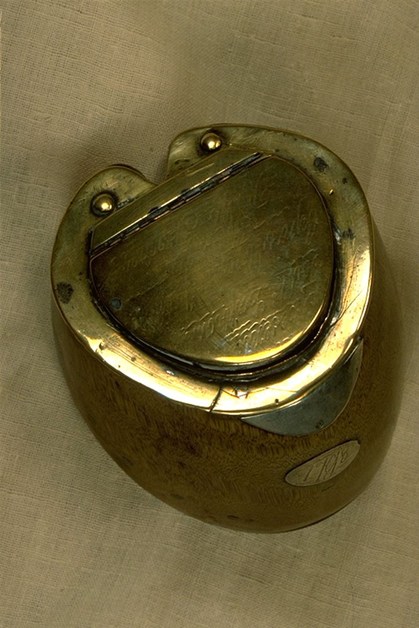
Evidence of their friendship is shown by a silver inkwell made from a pony's hoof given by Burns to Lapraik in 1793 - which is now on exhibition at Robert Burns House, Dumfries and Galloway. The brass lid is inscribed:
Presented To Mr Lapraik by his Much respected Friend Robt Burns
In Burns' First Epistle to Lapraik he proposed a meeting (which happened in late 1788 at Muirsmill).
John Lapraik had an interest in poetry which he maintained throughout his life and arranged for a book of his poems and songs to be published in 1788, two years after Burns had first had his poems published by the same printer to great acclaim.
Lapraik's poems are interesting in giving an insight into what it was like to live in Ayrshire in the second half of the 18th century - much of the material in the poems relates to matters of which Lapraik had personal experience and ties in with other material relating to Muirkirk and Ayrshire that features on this site.
In fact Lapraik's book did not sell well and the subscribers did not profit from their investment. This was something which so pleased another contemporary, James Maxwell (who disapproved of both Lapraik and Burns), that he published his own poem expressing delight that Lapraik's subscribers had lost their money.
 Whilst Burns became famous and moved to Edinburgh, Lapraik remained at Muirsmill until 1798 when:
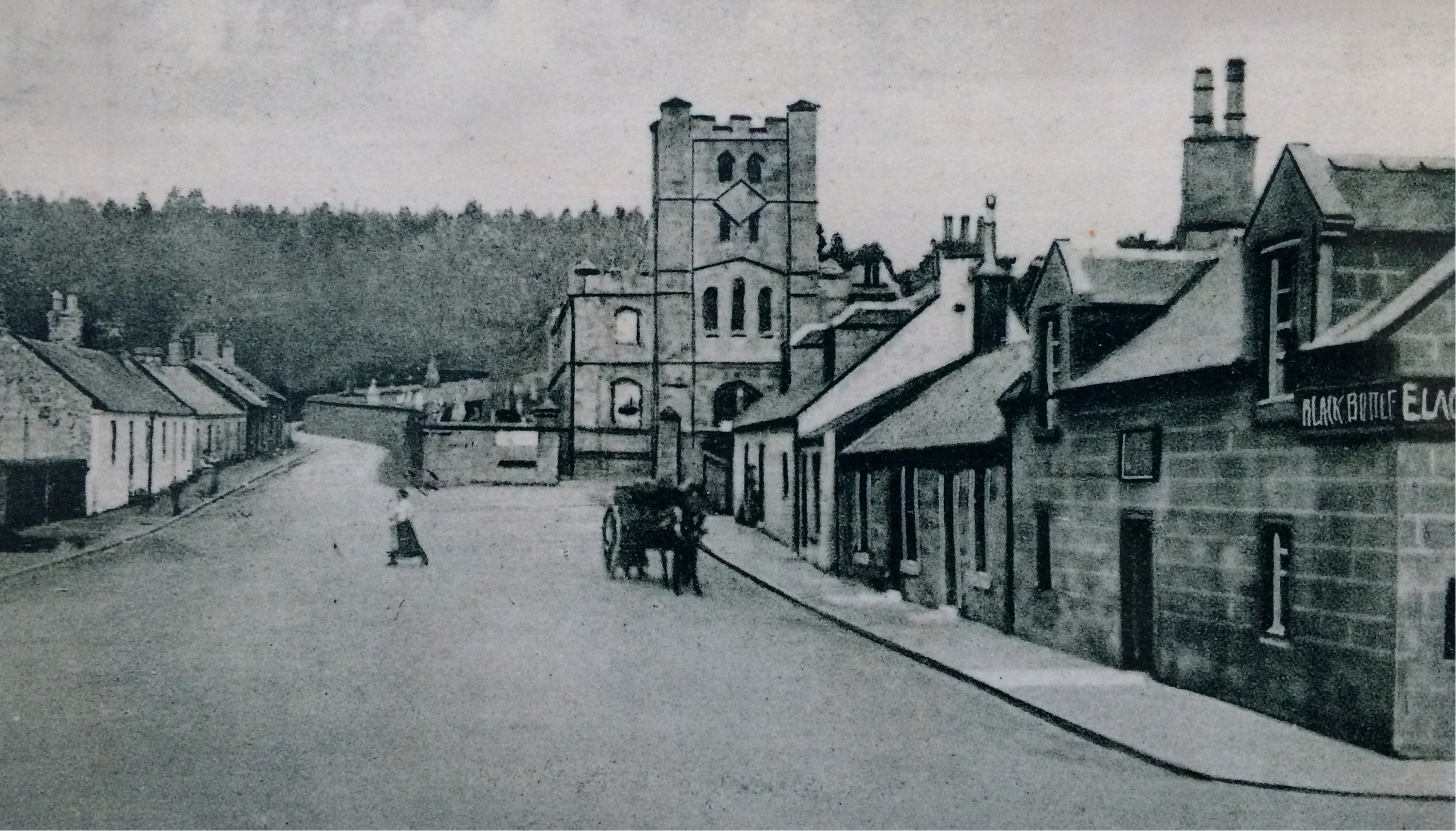
... Lapraik, then far advanced in years, removed to Muirkirk, where he opened a small public house, which served at the same time as the village Post Office, he having been, through the kindness of friends, installed into that trust. Here he lived much respected until his death, which took place on 7th May 1807 in the eightieth year of his age.
"The Contemporaries of Burns and the more recent poets of Ayrshire" (1840) by James Paterson
The house (the white cottage seen to the right of the Church) still stands.
Following his death in 1807 he was buried in the churchyard at Kirkgreen (behind the Church in the above photograph) and his grave is marked by a tabular stone which has the inscription:
In Memory of
John Lapraik late of Dalfram
who died at Muirkirk on
7th May 1807
In the 80th year of his age.
John Lapraik's memory was subsequently kept alive by the Lapraik Burns Club which arranged for the erection of a memorial.
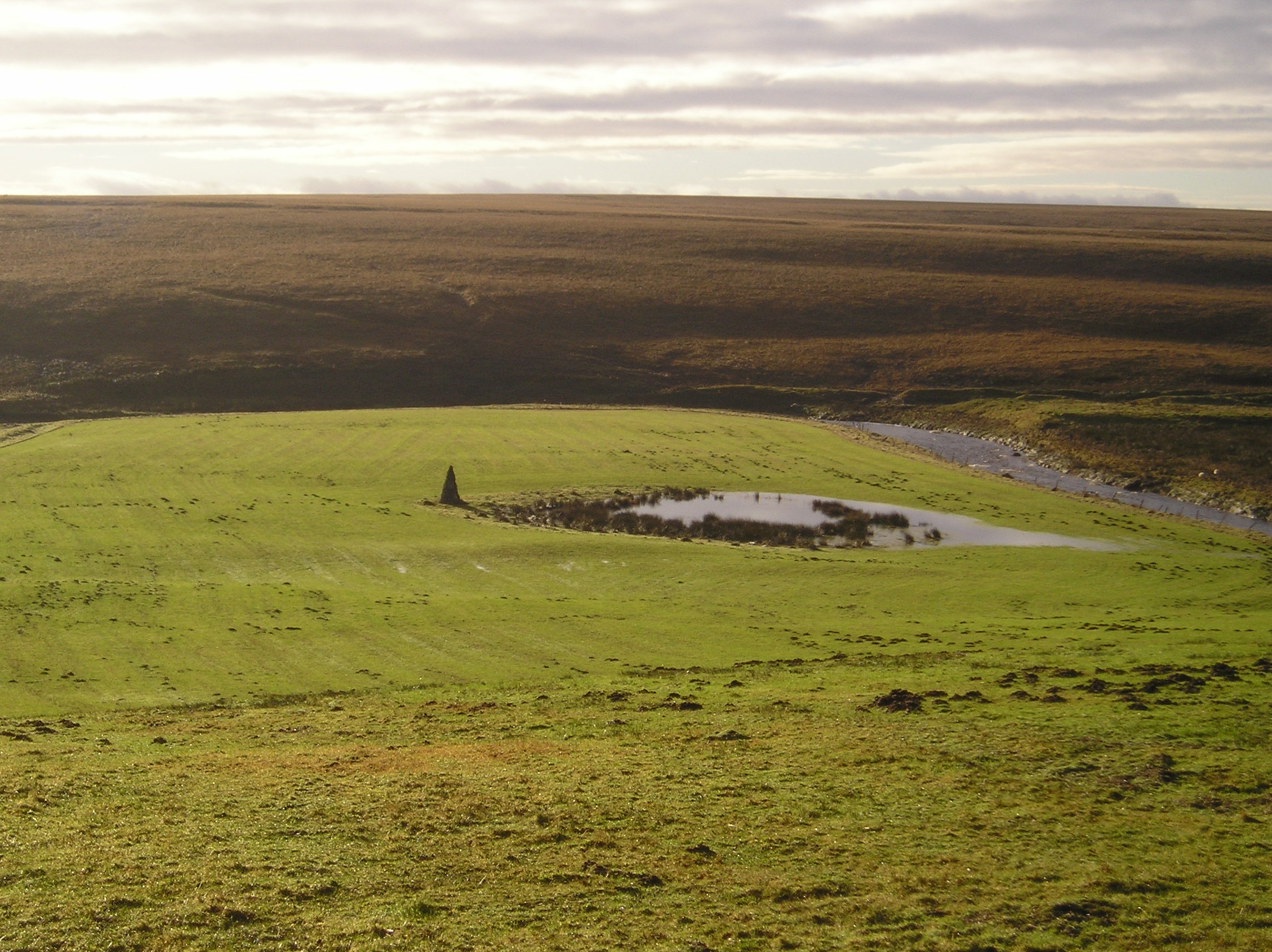
The Memorial Cairn is ten feet high and built from stone from Lapraik's house, Dalfram, in a field that lies between the Sorn and Cumnock roads. It can be viewed from the Sorn road on the Muirkirk side of Townhead farm.
There is a contemporaneous account of the ceremony when the Memorial was formally inaugurated which featured in the Muirkirk Advertiser in 1914 that is reproduced in a book entitled "Cairntable Echoes"that records the history of Lapraik's forbears and asserts that John Lapraik was Burns' model in "A Man's a Man for a' That", one of Burns' most famous poems.
There is more information relating to John Lapraik contained in a chapter of a book by James Paterson entitled "The Contemporaries of Burns and the more recent poets of Ayrshire" (1840) and there is a full transcript of the relevant section.
As more material relating to John Lapraik's descendants comes to light it is being captured here.
© John Lapraik www.lapraik.com
Portraits copyright East Ayrshire Council.
Photograph of inkwell courtesy of Dumfries Museum.
Photograph of cottage courtesy of East Ayrshire Council, Baird Institute, 3 Lugar Street, Cumnock, KA18 1AD.
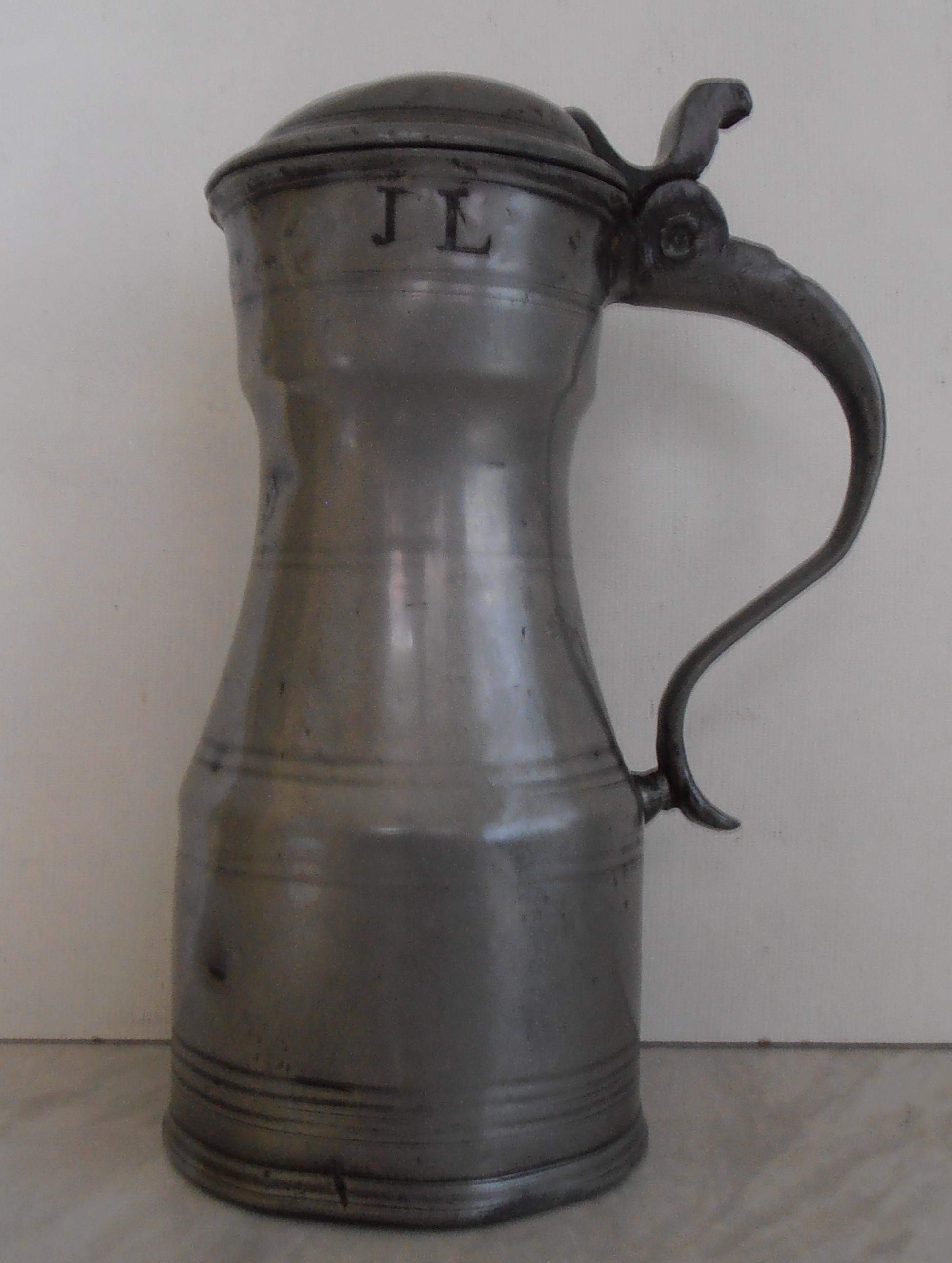
Photograph of tappit hen pewter drinking vessel courtesy Graham Robertson.